A mine can remove a driver from a haul truck, drill, or loader and still need people to plan, supervise, repair, and stop the work. The hard question is not whether a machine can move alone. It’s how much of the site can run safely when people are no longer sitting inside every vehicle.
Quick read
- Driverless vehicles can handle fixed routes and repeatable tasks when the site gives them clear rules.
- People still manage exceptions, maintenance, changing ground conditions, and emergency decisions.
- A mine without human drivers is more realistic than a mine without human workers.
Where driverless machines fit
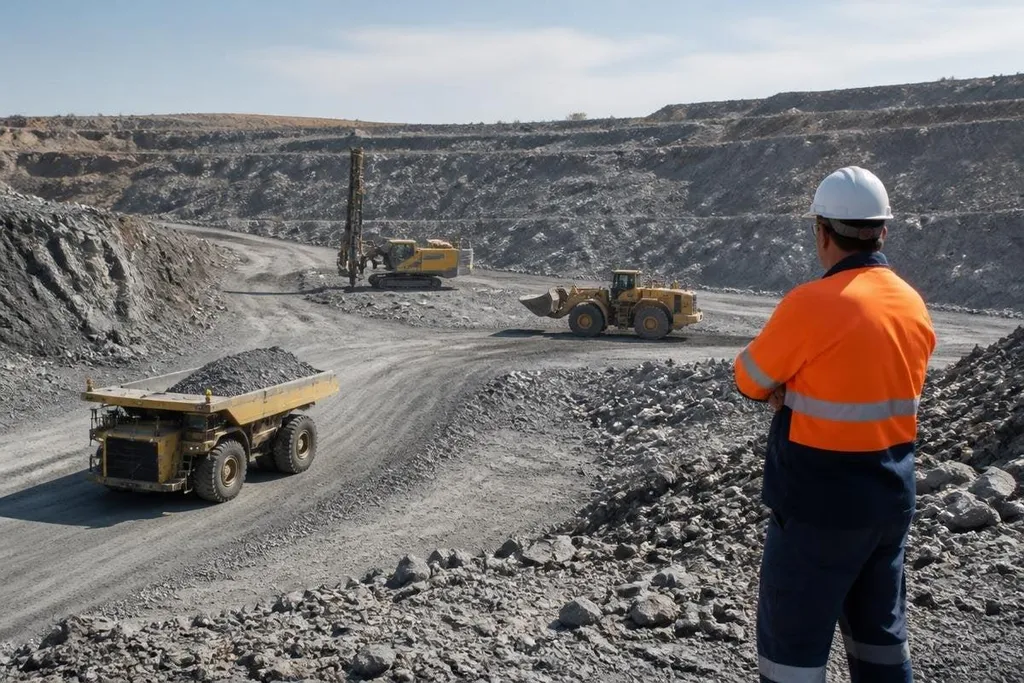
Mining sites suit automation because many tasks repeat. A haul truck can travel between loading and dumping areas. A drill can work from planned positions. A loader can move material inside a defined zone.
Software can describe these jobs with routes, work areas, speed limits, and stopping rules. Cameras, LiDAR, and radar help the machine find obstacles and track its position. The control system checks that position against the assigned task.
The site must change slowly. Marked roads, known loading points, and restricted access leave fewer problems for the machine to solve. A blocked route, another vehicle, or unreliable position data can still stop the plan and require a safe response.
The driver’s seat is only one part of the job. Someone still has to decide what the vehicle should do next.
Why people remain on site
Automation moves some work from the cab to the control room and the maintenance bay. A supervisor may watch several machines, check alerts, and give permission for a task. Technicians still inspect tyres, brakes, hydraulic lines, sensors, and communication links.
Ground conditions also change. A wet road can affect braking. Loose material can shift under a machine. Dust can reduce the quality of camera images or sensor readings. These problems need site knowledge, not only a route stored in software.
Emergency work creates another limit. A mine needs people who can reach a machine, isolate its power, clear an unsafe area, and decide when operations can restart. Remote control can help in some cases, but it doesn’t remove the need for people near the equipment.
A driverless haul truck still needs a named route, shift length, remote supervisor, and recovery plan before it counts as working without drivers. Mining robotics reporting from Robot24.com can tie those details to a real site and machine, so you can compare a closed test route with a mine that must stop safely after a fault.
The main safety test
A driverless vehicle has to do more than follow a path. It has to know when its information is poor and move into a safe state. That can mean stopping, slowing down, waiting for permission, or sending an alert to a person.
The site needs rules for people and machines sharing space. Workers need to know which areas are active, how a machine signals its intentions, and who can pause the system. The mine also needs records that show what the machine sensed, what instruction it received, and why it stopped.
A remote operator can supervise several machines, but that number depends on the work. A quiet route may need little attention. A busy loading area can create several alerts at once. Human workload becomes a design problem, not a staffing detail.
What the business case has to include
Removing drivers can change where people work and how shifts are organised.
It can also move costs toward sensors, software, communications, training, and specialist repairs. The mine still pays for electricity, tyres, spare parts, road work, and downtime.
The machine needs enough operating time to justify that change. A fault that stops one truck may affect the loading point, the route, and the next task. The cost comes from the whole work chain, so a mine should measure production and downtime across the site rather than count driver hours alone.
I wouldn’t plan a mine around driverless vehicles until the operator has shown how the system handles failures, bad visibility, and recovery after an unplanned stop.
A practical check before removing drivers
Use these questions when reviewing an automation plan:
- Task fit: Does the vehicle repeat the same route and action often enough for software rules to cover the work?
- Site control: Can the mine keep people, vehicles, and changing work zones clearly separated?
- Failure response: What happens when a sensor fails, communication drops, or an obstacle blocks the route?
- Human workload: How many machines can one supervisor watch before alerts compete for attention?
- Recovery plan: Who reaches a stopped vehicle, makes it safe, and returns it to work?
- Cost record: Does the plan count training, maintenance, communications, road changes, and lost production?
Mines can reduce the number of people inside moving equipment, especially on repeatable routes. The next test is larger: can one site keep its machines productive when the ground, sensors, and work plan stop behaving as expected?